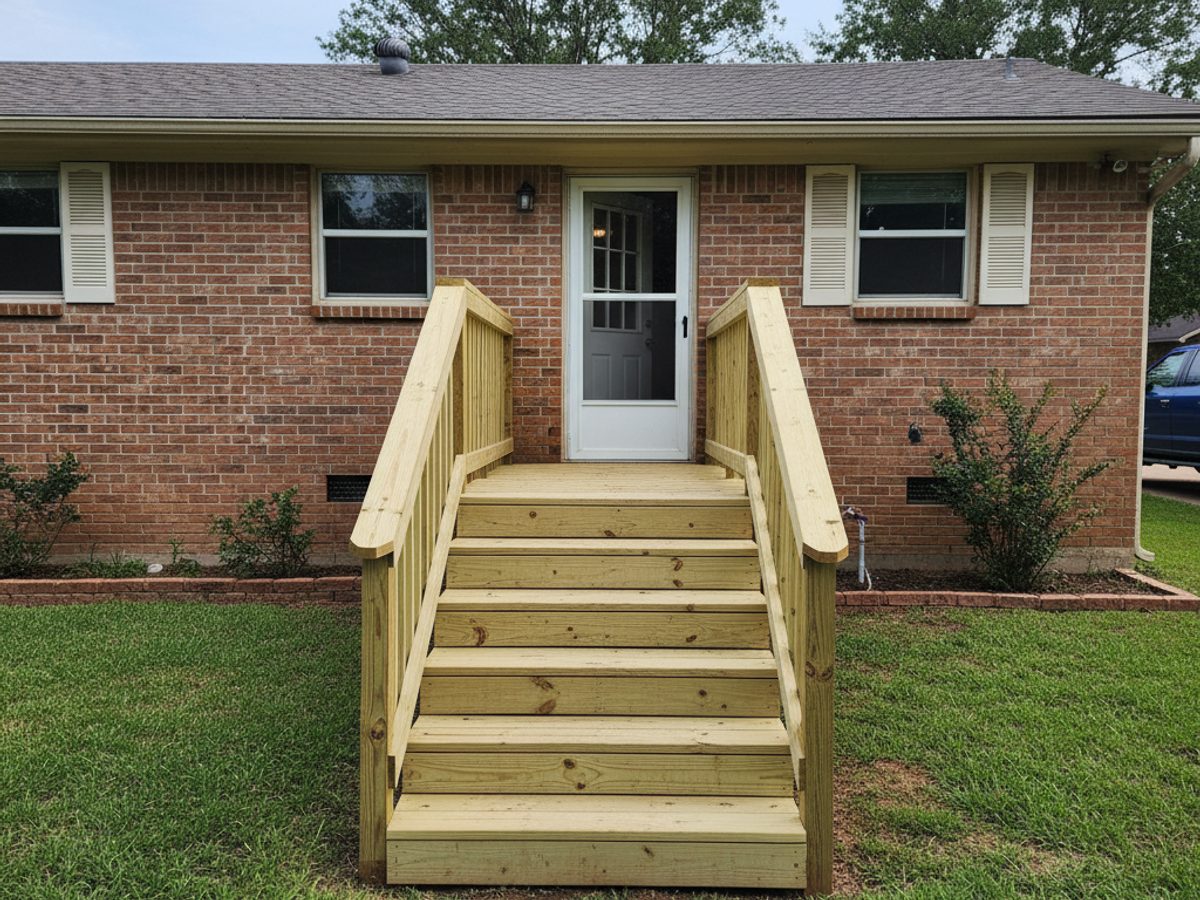
Ask a deck builder in most of the country when to schedule work and the answer is about frost lines and snow melt. El Paso doesn't play by those rules. The ground here barely freezes, winters are short and mild, and the thing that actually controls your calendar is caliche, monsoon rain, and a wind season that shows up every spring like clockwork. The right month depends on what part of the job you're talking about. Digging footings, staining boards, and framing a structure each have their own window.
The ground doesn't freeze here, but caliche still sets the clock
In a lot of the country, you wait until the ground thaws to dig post holes. In El Paso the frost line is only a few inches deep and most years it barely matters. What does matter is caliche, the hard, chalky layer of calcium carbonate that sits a foot or two down in a lot of yards on the east and west sides of the city. It doesn't soften with rain and it doesn't care what season it is. You hit it with an auger or a hand digger and it breaks slow no matter what month you're in. That means footing work isn't really weather-dependent the way it is up north. It's more about not trying to dig through it in July heat if you don't have to, because the crew tires out fast and the work gets sloppy.
City of El Paso inspectors check footing depth and post hole diameter before concrete goes in, so that step happens on their schedule as much as yours. Spring tends to be a busier season for permit reviews because that's when most homeowners start projects, so building in a few extra days for inspection scheduling in March or April isn't a bad idea.
Heat kills a stain job faster than it kills a crew
El Paso sits at about 3,700 feet, and the sun here is stronger than the thermometer suggests. A stain or sealant that's rated to dry in 30 minutes somewhere near sea level can flash dry in half that time on a deck surface in direct August sun. When a finish dries too fast it doesn't penetrate the wood grain, it just sits on top and lap marks show up where one pass overlapped the last. That's the main reason summer is a poor month for staining or sealing, even though it feels like the obvious time to be outside working on a deck.
Late spring, before the real heat sets in around late May, and October into November are the better windows. Daytime temps sit in the 70s and 80s, the surface isn't blistering hot to the touch, and the finish has time to soak into the board before it sets. If you're sealing a new build, most manufacturers also want the wood to dry out for a few weeks after installation before the first coat goes on, so timing that drying period around a mild stretch matters as much as the day you actually apply it.
Monsoon season changes what you can pour and what you can build
July and August bring El Paso's monsoon pattern, short, hard afternoon downpours that can dump half an inch of rain in twenty minutes after weeks of nothing. That's a bad combination for concrete footings, which need a few days of stable weather to cure properly before you load them, and it's a bad combination for any open lumber that hasn't been sealed yet. Untreated pine left out in a surprise downpour will take on moisture, and if it dries unevenly afterward you can end up with cupping or warping in boards that haven't even been installed yet.
It's not that you can't build in July and August, plenty of people do, it's that you build around the forecast more carefully. A framing crew that's good at this will check the radar in the morning and plan the pour or the lumber delivery around the storm window rather than ignoring it.
Spring wind is the quiet problem nobody warns you about
March and April in El Paso bring sustained wind, sometimes 30 to 40 mph gusts, along with the dust that comes with it. It's not dangerous for most deck work, but it's miserable for anything involving wet finish. Dust settles into stain and sealant before it cures and you end up sanding grit out of your topcoat. It also makes precise trim cuts and railing alignment harder than it needs to be when you're fighting wind on a ladder. If your project involves custom railing work or detailed trim, late April through early May, once the wind usually settles, tends to go smoother than the peak of wind season in March.
What this means for scheduling your project
Put it together and El Paso actually has two solid windows rather than one: late September through November, and April into early June before the heat peaks. Those months avoid the worst wind, dodge monsoon rain, and keep daytime temps in a range where stain cures properly and crews aren't working through 105-degree afternoons. Winter is workable too, especially for framing and structural repair, since El Paso rarely sees hard freezes that would stop concrete from setting, though a January cold snap can still slow curing time by a day or two.
If you're in an older neighborhood like Kern Place or Sunset Heights, the lots are smaller and the original decks or porches often go back decades, which usually means more repair and replacement work on old framing rather than a build from scratch. Out in the newer subdivisions on the far east or far west side, you're more likely starting from bare dirt and dealing with an HOA review on top of the city permit, which can add a couple of weeks before anyone touches a shovel. Either way, the season you pick should match the step you're on, not just the project as a whole.
If you're trying to figure out where your project falls in that calendar, that's the kind of planning conversation we have with homeowners before any wood gets cut. You can see the range of work we handle at Oasis Deck.